Download Mac PowerSuite below to have a try. Note: This product requires Mac OS X 10.13 or later.

Part 1: Download & Install Mac PowerSuite to Get Started
First, download Mac PowerSuite onto your Mac from the product page.
After downloading, open the downloaded file and drag Mac PowerSuite into your Applications folder.

Once installation is complete, launch Mac PowerSuite from the Applications folder or Launchpad.
Part II: How to Use Mac PowerSuite on Mac
When you open Mac PowerSuite, the main window provides access to the following modules:
• Mac Overview
• Mac Reporter
• Clean Up
• Duplicate Files
• Auto Clean
• App Manage
• Utilities
Each module is designed to help you monitor, clean, organize, and maintain your Mac.
Mac Overview
Mac Overview provides a quick look at your Mac's hardware, macOS information, and current system status. Mac Overview provides a quick look at your Mac's hardware, macOS information, and current system status.
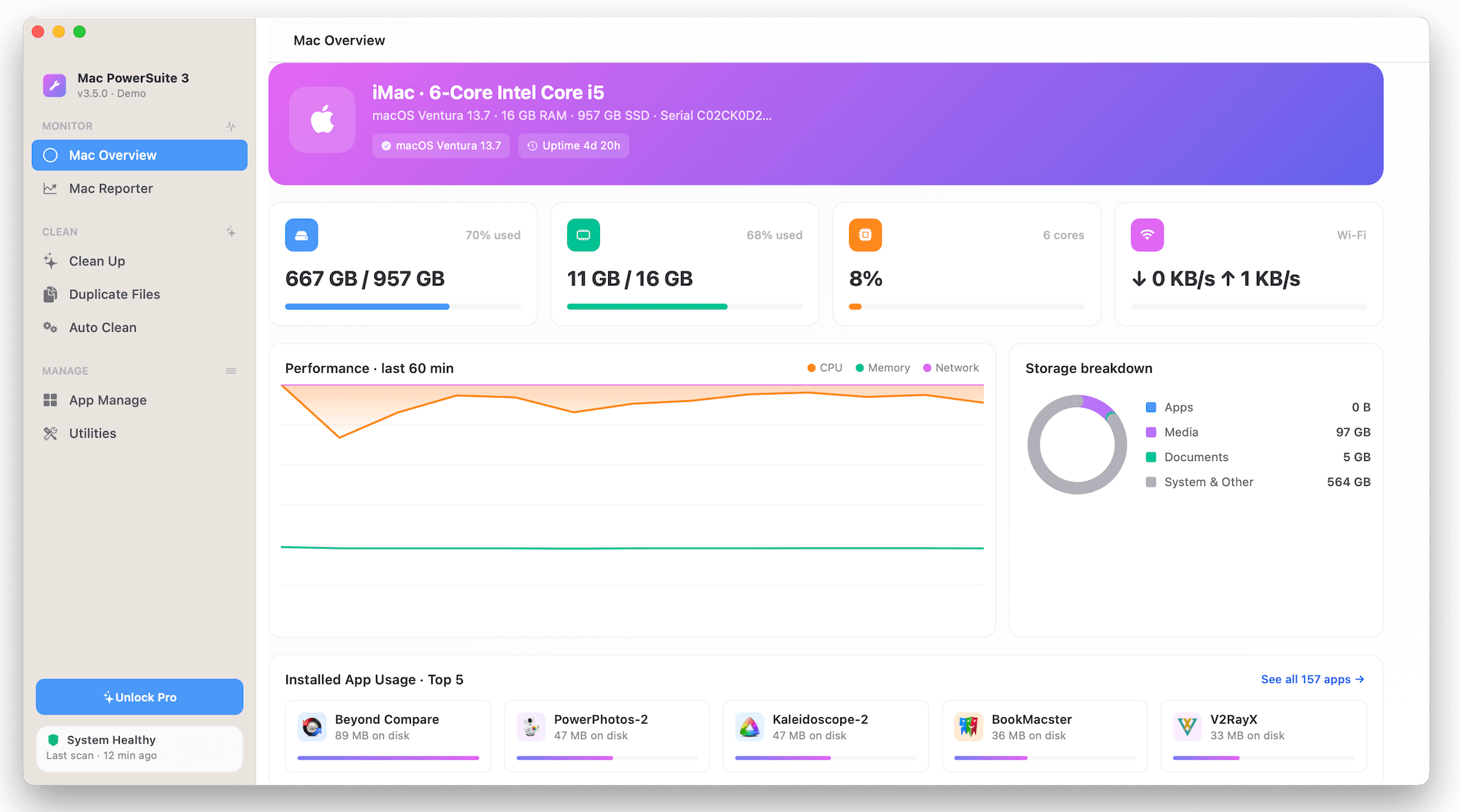
• Mac model and hardware information
• macOS version
• Storage usage
• Memory usage
• CPU status
• Network usage
• Application usage
• Other system information
This gives you a convenient overview of your Mac's current condition without having to check different system settings individually.
Mac Reporter
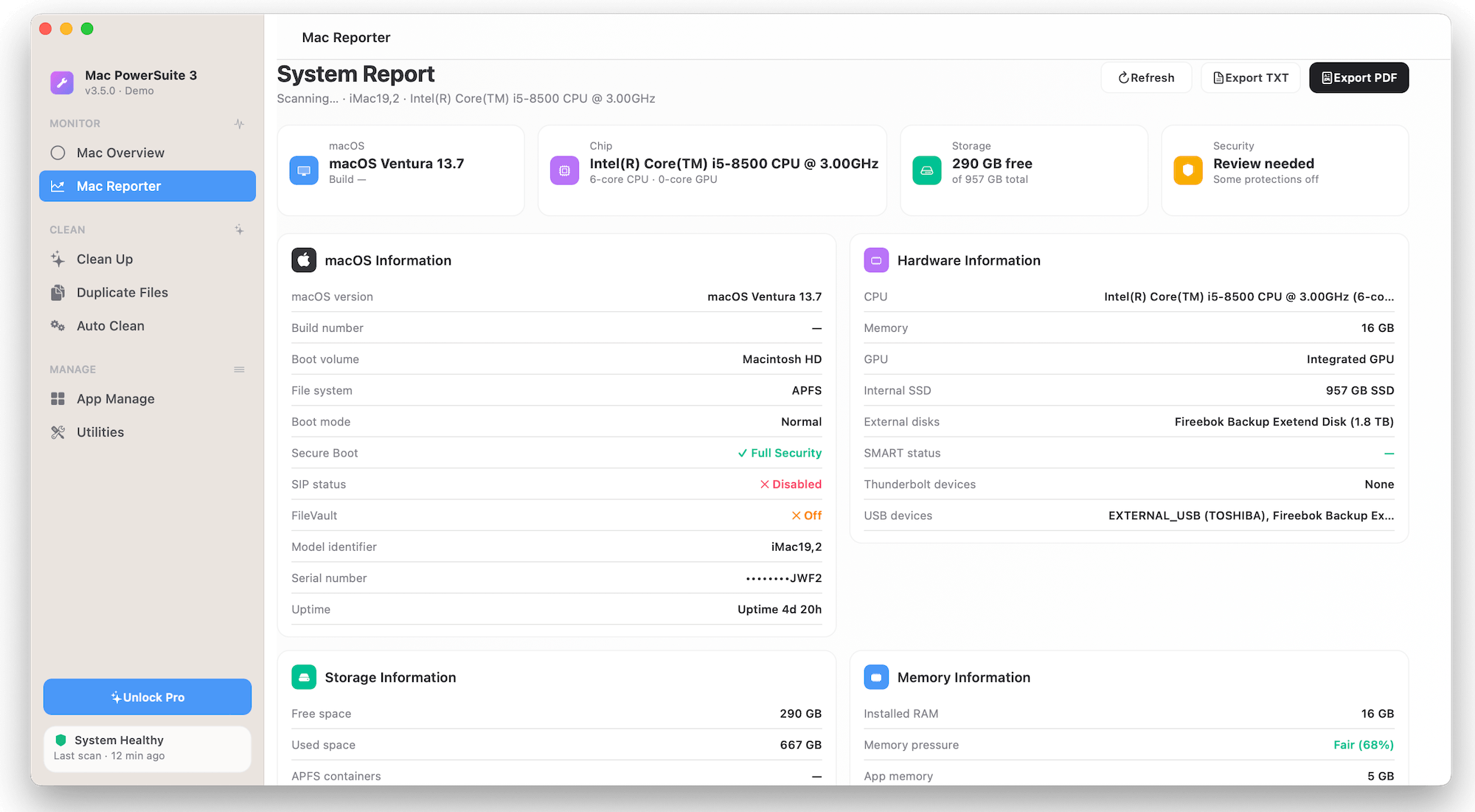
Mac Reporter provides a more detailed analysis of your Mac and generates comprehensive system reports. You can export reports as TXT or PDF files for troubleshooting, maintenance, or record keeping.
| Category | Property / Metric |
|---|---|
| macOS Information | |
| macOS Version | System Version |
| Build Number | System Build Identifier |
| Boot Volume | Startup Disk Name |
| APFS File System | APFS Formatting Details |
| Boot Mode | Normal / Safe Boot |
| Secure Boot | Security Policy Status |
| System Integrity Protection (SIP) | SIP Status (Enabled/Disabled) |
| FileVault | Encryption Status |
| Model Identifier | Mac Model ID |
| Serial Number | Hardware Serial Number |
| System Uptime | Time Since Last Reboot |
| Hardware | |
| CPU | Processor Model & Cores |
| Memory | Total RAM Capacity |
| GPU | Graphics Controller Details |
| SSD/HDD | Internal Storage Hardware |
| External Drives | Connected Storage Devices |
| SMART Status | Drive Health Indicator |
| Thunderbolt Devices | Connected Thunderbolt Hardware |
| USB Devices | Connected USB Hardware |
| Storage | |
| Used and Free Space | Disk Space Allocation |
| APFS Containers | Container Hierarchy & Sharing |
| Mounted Volumes | Currently Active Volumes |
| Weekly Storage Growth | Storage Usage Trends |
| Fastest-Growing Folders | Directory Expansion Metrics |
| Newly Created Files | Recent File Activity |
| Largest New Files | Recent High-Volume Storage Additions |
| Memory | |
| Installed RAM | Physical Memory Size |
| Memory Pressure | System RAM Availability & Stress |
| Swap Usage | Paging File Activity |
| Startup Items | |
| Login Items | User-Level Auto-Start Apps |
| LaunchAgents | User/System Agents |
| LaunchDaemons | System-Level Daemons |
| Other Startup Items | Legacy Startup Items |
| Background Services | |
| Running Daemons | Active Background Daemons |
| Background Agents | Active Background Agents |
| System Services | Core OS Services |
| Installed Applications | |
| Installed Apps | Application Inventory |
| App Version | Application Release Version |
| Code Signature | Digital Signature Details |
| Apple-Signed Status | Verification of Apple Authorization |
| Extensions | |
| Kernel Extensions on Intel Macs | Legacy KEXTs |
| System Extensions on Apple Silicon Macs | Modern System Extensions |
| Browser Extensions | Installed Web Browser Add-ons |
| Security | |
| System Integrity Protection (SIP) | Root Enforcement Status |
| Gatekeeper | App Execution Policy Status |
| FileVault | Full Disk Encryption State |
| Secure Boot | Hardware Security Enforcement Level |
| Unsigned Software | Detected Unverified Binaries |
| Crash Reports | |
| App Crashes | Application Diagnostic Logs |
| Hung Applications | Application Unresponsiveness Events |
| Panic Reports | Kernel Panic Diagnostic Logs |
| Sleep/Wake Panics | Power Management Crash Logs |
| GPU Panics | Graphics Hardware Crash Logs |
| Disk Health | |
| SMART Status | Hardware Diagnostic Health |
| Disk Errors | I/O Read/Write Errors |
| APFS Health | File System Integrity Metrics |
| Network | |
| Upload and Download Usage | Data Throughput Totals |
| Top Network Apps | High-Bandwidth Applications |
| Top Domains | Most Frequently Contacted Hosts |
| VPN Usage | Active Virtual Private Network Connections |
| Wi-Fi Quality History | Wireless Network Metric Logs |
| Performance | |
| Startup Performance Estimation | Boot Time Analysis & Drivers Metric |
Clean Up
The Clean Up module helps you find unnecessary files and reclaim storage space on your Mac. The Clean Up module helps you find unnecessary files and reclaim storage space on your Mac. Mac PowerSuite scans macOS and organizes the results into categories, making it easier to review and safely remove unwanted files.
• Application Caches
• Log Files
• Browser Cache and Web Data
• Application Support Cache
• Time Machine Local Snapshots
• Mac Trash
• Failed Downloads
• Temporary Files
• Large Files over 50 MB, with a customizable size threshold
• iPhone and iPad Backups
• Screenshots
• macOS Installer Packages
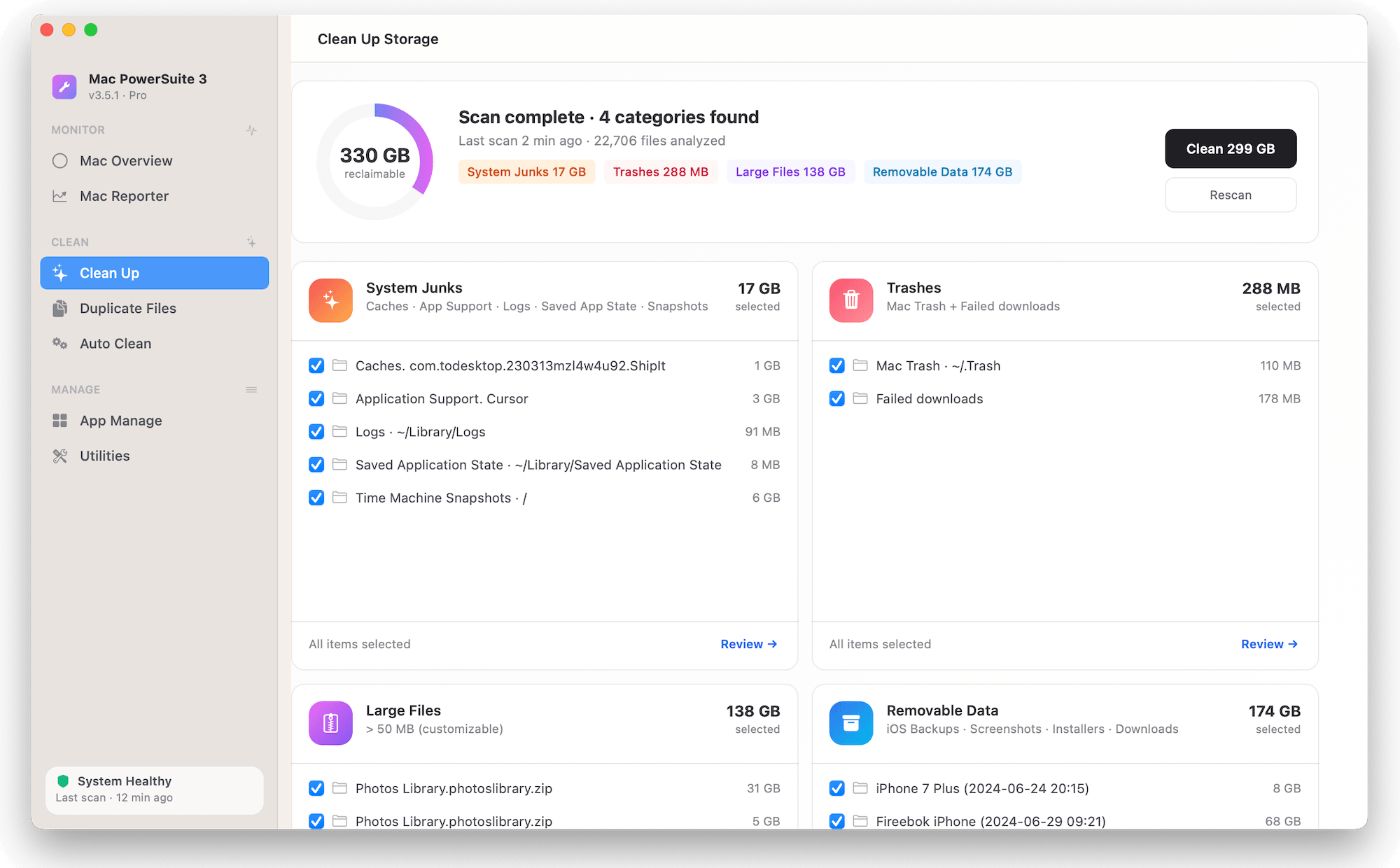
Review the scan results, select the items you want to remove, and use the cleanup function to free up disk space.
Find Duplicate Files
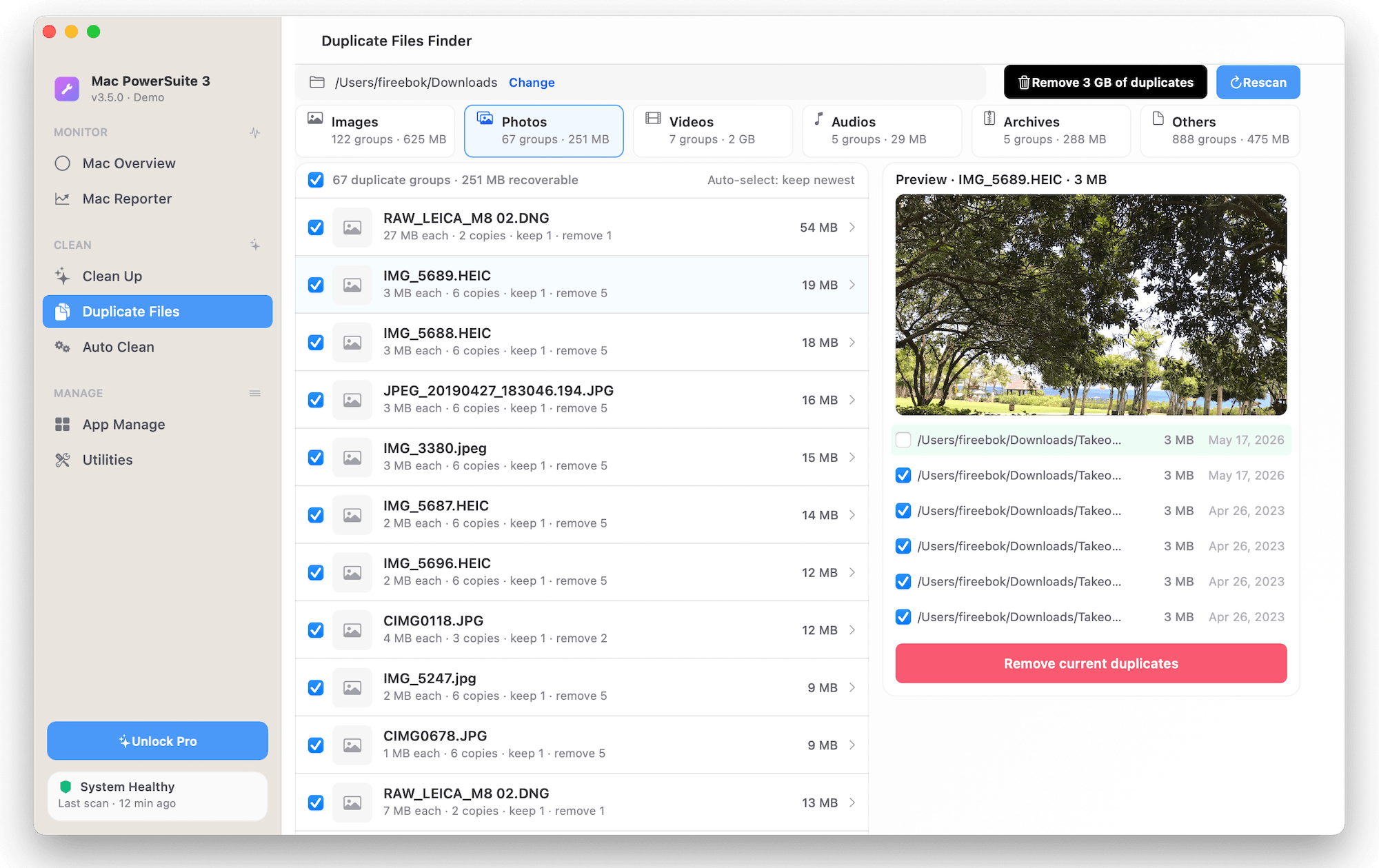
The Duplicate Files module helps you find and remove duplicate files from your Mac. It can scan folders and identify duplicate photos, videos, music, documents, archives, and other types of files.
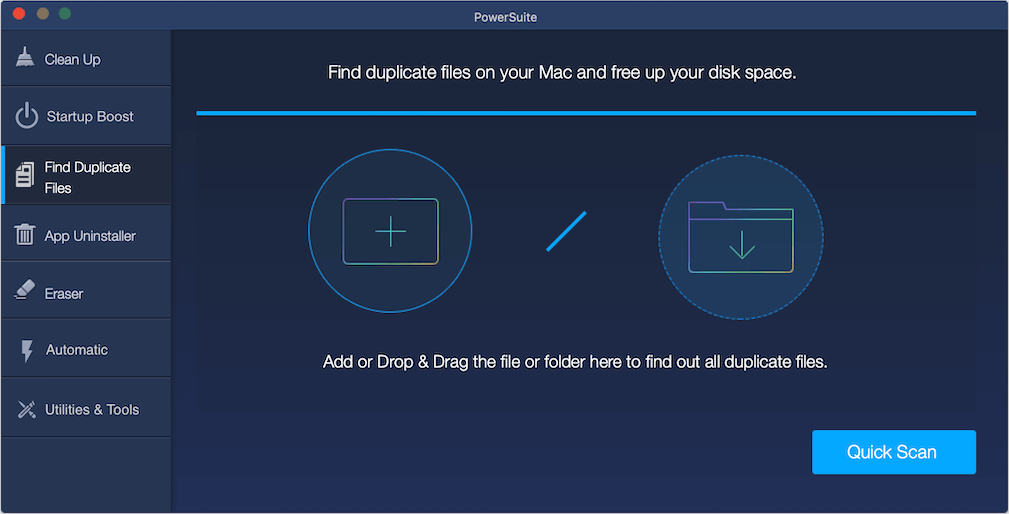
Step 1: Select a Location
Select a folder or disk or add a location manually. Then click Scan for Duplicates to start searching for duplicate files.
Step 2: Review Duplicate Files
After the scan is complete, Mac PowerSuite displays the detected duplicate files in an organized view. You can preview supported photos and review duplicate groups before deleting anything.
The Auto Check feature can automatically select duplicate files while keeping the original file in each duplicate group.
Step 3: Remove Duplicates
Review the selected files and click Remove Duplicates to delete the unwanted copies and reclaim storage space.
App Manager
The App Manager module helps you manage and completely uninstall applications and supported plugins from your Mac. Instead of removing only the main application, Mac PowerSuite can help identify related files and folders associated with an app. You can view:
• Install Date
• App Size
• Download Source
• App Type
• Last Opened Date
• Related Files and Folders
• Installed Versions
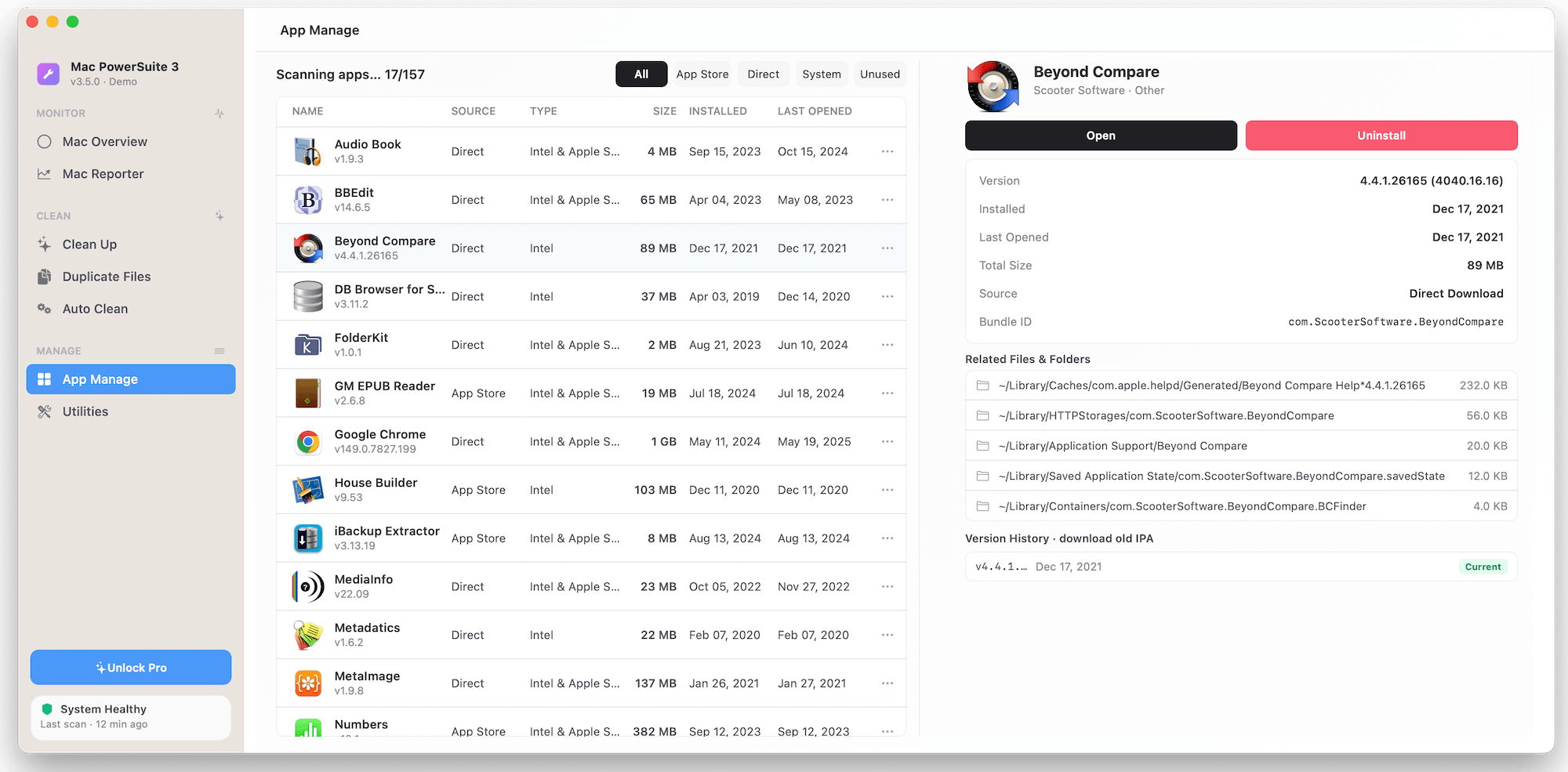
Select an application to review its information and associated files, then uninstall it when you no longer need it.
Auto Clean
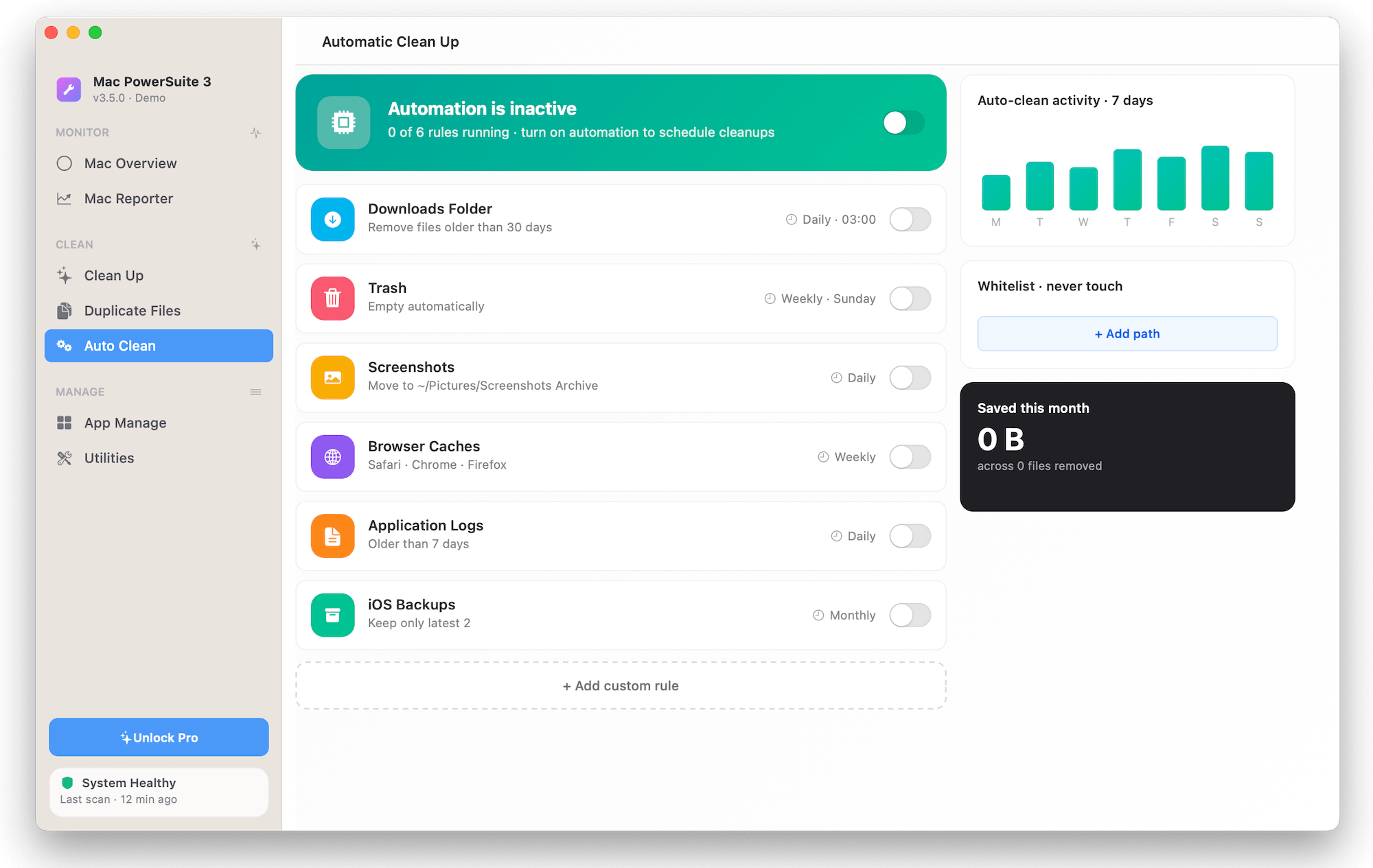
The Auto Clean module helps automate routine Mac cleanup tasks.
It can help remove unwanted files and selected personal or temporary data according to the available cleanup options, helping you keep your Mac organized without manually searching for unnecessary files each time. Review the available cleanup categories and settings before running an automatic cleanup.
Utilities
The Utilities module provides a collection of independent tools for everyday Mac management and maintenance. Available tools include:
• Startup Items — Manage applications and services that launch automatically when you start your Mac.
• Eraser Disk & Files — Securely erase selected files or disks when supported.
• Encrypt Files & Folders — Protect selected files and folders with encryption.
• Default Open Apps — View and change which applications are used to open specific file types.
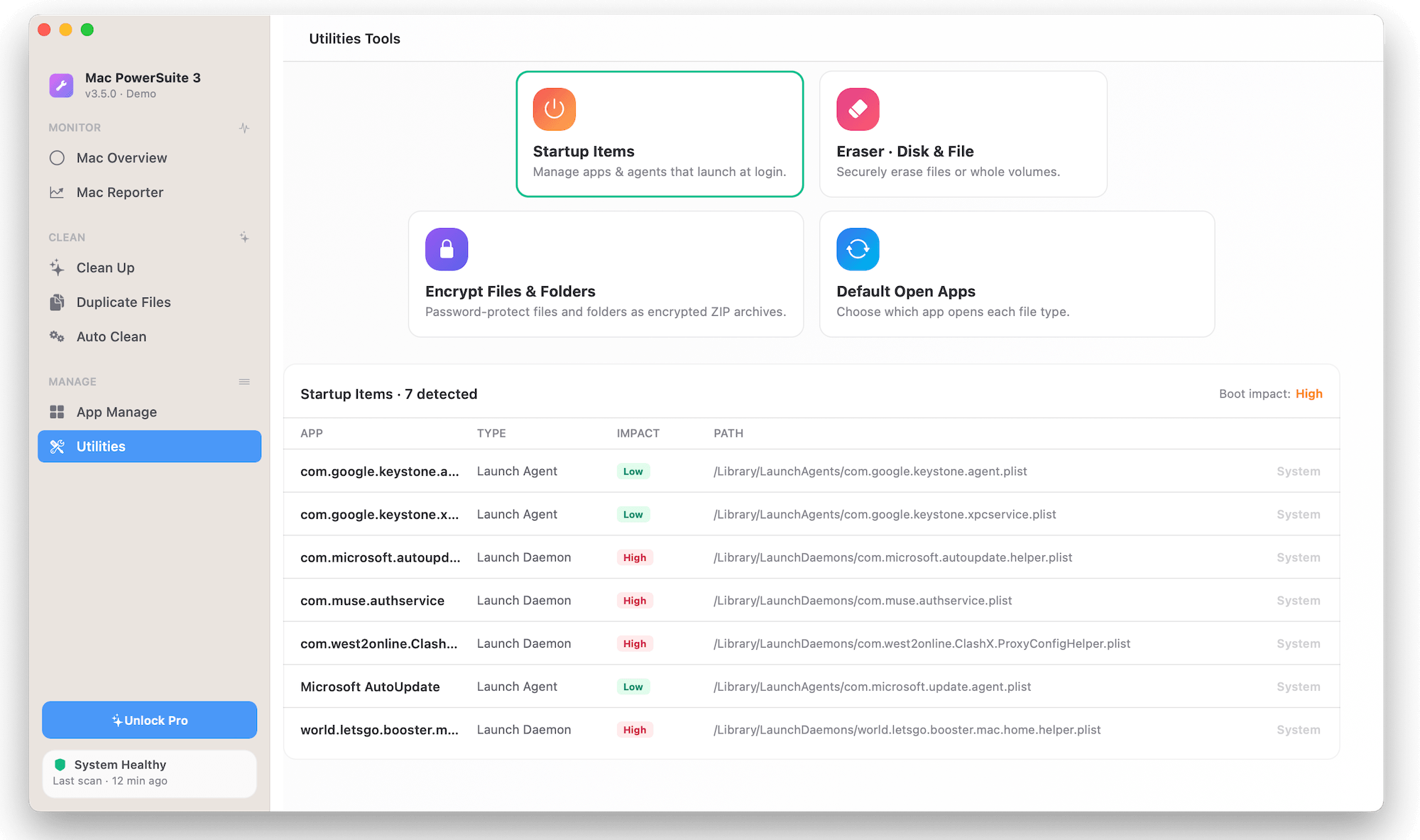
These tools provide additional ways to manage startup items, protect data, securely remove files, and customize your Mac.
Need Help?
Have questions or need assistance with Mac PowerSuite?
Contact our support team through the Fireebok Support Center.